
Ex-Olympic snowboarder pleads not guilty to murder, running drug smuggling ring

A former Canadian Olympic snowboarder pleaded not guilty to running a billion-dollar drug trafficking ring and orchestrating multiple killings, as one of the FBI’s top fugitives made his first U.S. court appearance Monday since he was arrested in Mexico last week and flown to California.
Wedding was prosecuted nearly 15 years ago in San Diego for conspiracy to possess and distribute 24 kilos of cocaine.
U.S. authorities say Ryan Wedding, who competed in a single event for his home country in the 2002 Winter Olympics in Salt Lake City, had been hiding in Mexico for more than a decade. He was added to the FBI’s Ten Most Wanted Fugitives list last March when authorities offered a $15 million reward for information leading to his arrest and conviction.
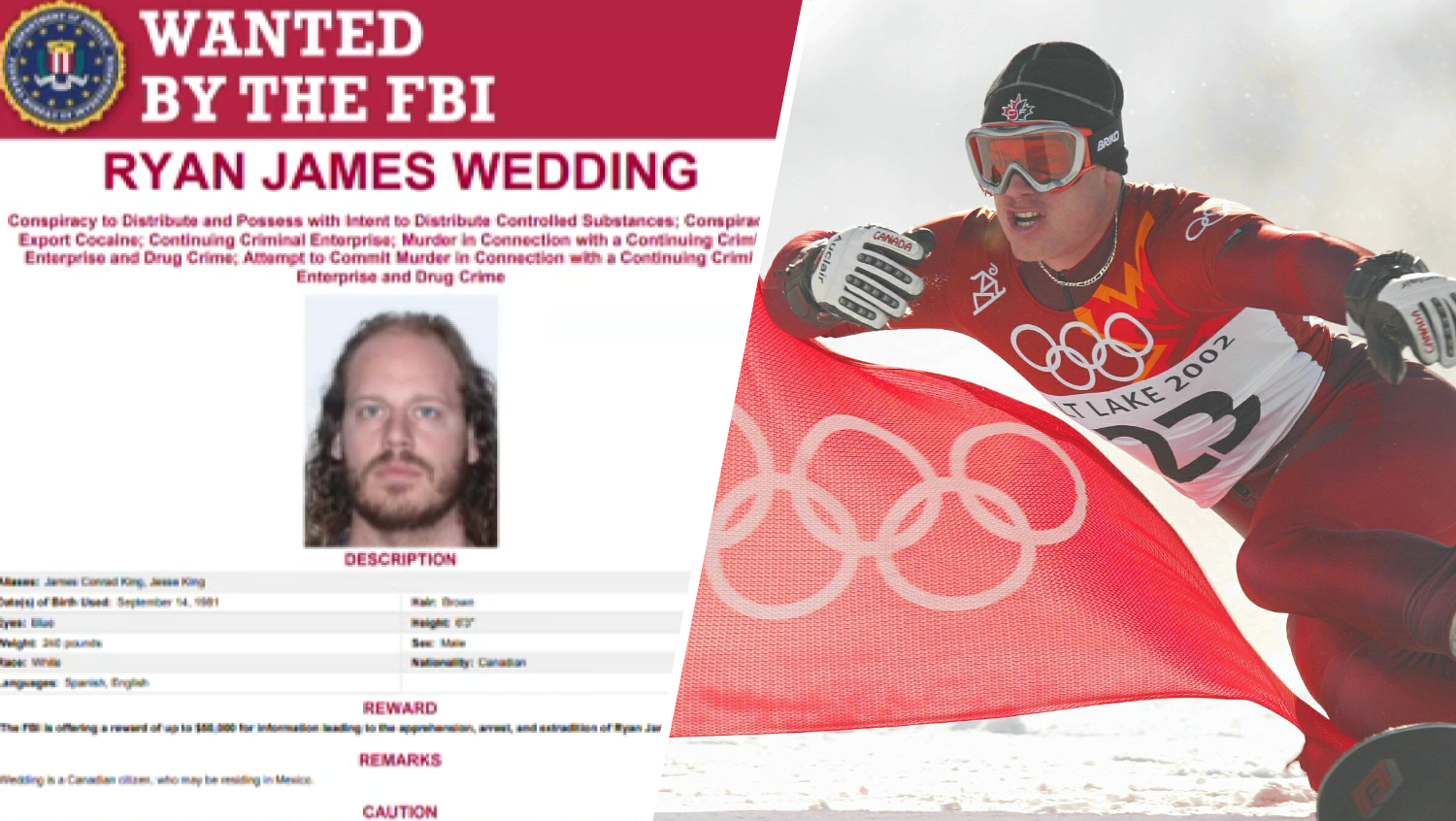
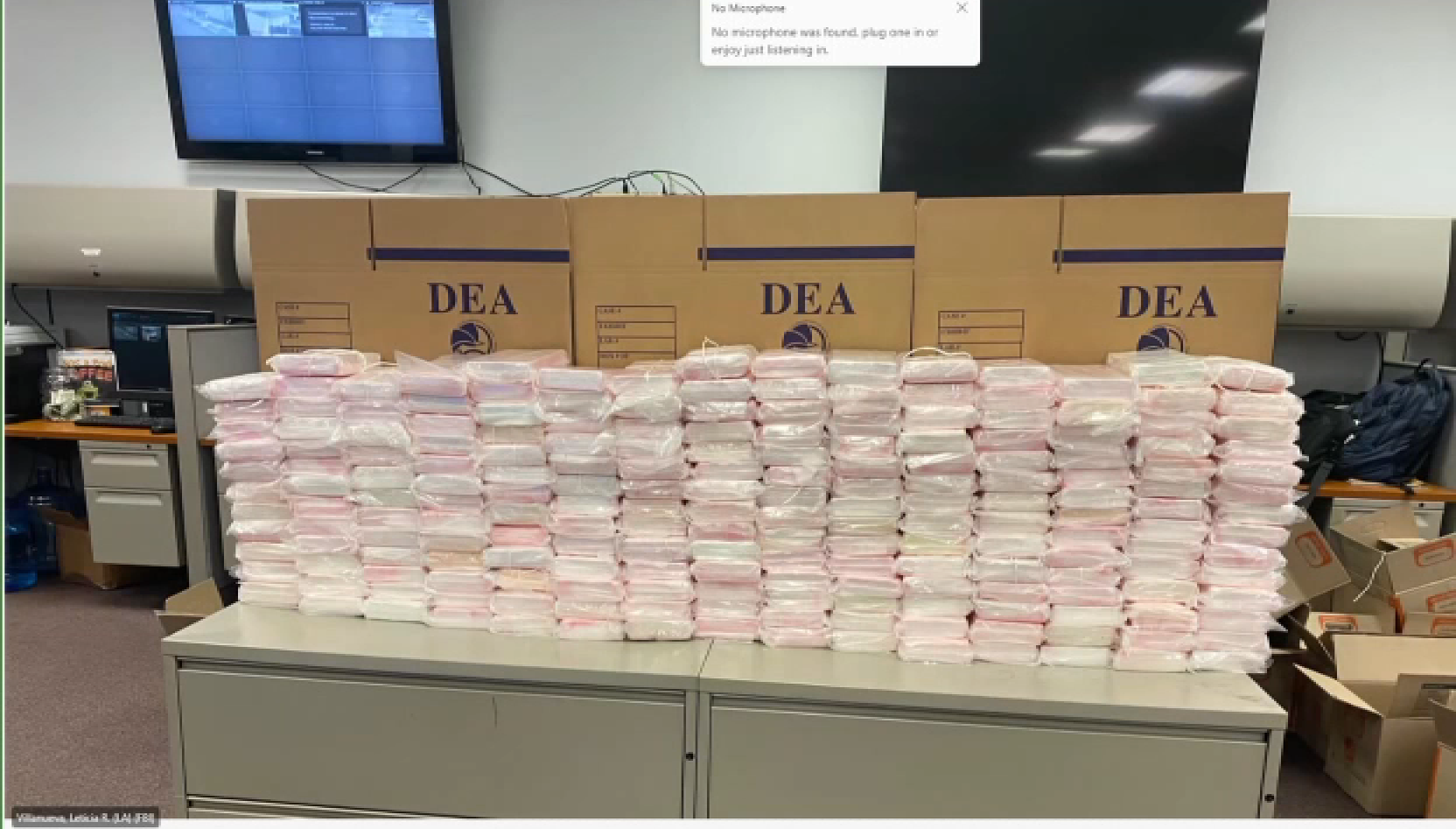
Authorities say Wedding moved as much as 60 tons of cocaine between Colombia, Mexico, Canada and Southern California and believe he was working under the protection of the Sinaloa Cartel, one of Mexico’s most powerful drug rings.
His drug trafficking group was the largest supplier of cocaine to Canada, according to a 2024 indictment in his home country, where he faces separate drug charges dating back to 2015.
Mexican officials said he turned himself in at the U.S. Embassy in Mexico City last week and was flown to Southern California after a yearlong effort by authorities in the United States, Mexico, Canada, Colombia and the Dominican Republic to arrest him.
When speaking to reporters Monday outside the federal court in Santa Ana, south of Los Angeles, Wedding’s defense attorney Anthony Colombo disputed that his client had turned himself in in Mexico and said he was living in Mexico, not hiding out there.
“He was arrested,” Colombo said after the brief hearing, offering no further details. “He did not surrender.”
Colombo said his client was in “good spirits” but added that “this has been a whirlwind for Mr. Wedding.”
Federal prosecutors declined to comment after the hearing. Wedding was scheduled to be back in court Feb. 11 and a trial date was set for Mar. 24.
Wedding arrived in court wearing a tan jail jumpsuit with his ankles chained. He smiled briefly, then clasped his hands and leaned back in his chair before reviewing papers with his attorney. When asked by U.S. Magistrate John D. Early if he read the indictments filed against him, Wedding answered, “I’ve read them both, yes.”
The judge ordered him held in custody, saying he could not immediately find conditions that would ensure public safety or Wedding’s appearance in court. He said he could consider bond if Wedding seeks it later.
Mexico has increasingly sent detained cartel members to the U.S. as the country attempts to offset mounting threats by U.S. President Donald Trump, who said last month U.S. forces “will now start hitting land” south of the border to target drug trafficking rings.
Wedding was indicted in 2024 on federal charges of running a criminal enterprise, murder, conspiring to distribute cocaine and other crimes.
The murder charges accuse Wedding of directing the 2023 killings of two members of a Canadian family in retaliation for a stolen drug shipment, and for ordering a killing over a drug debt in 2024. Last year, Wedding was indicted on new charges of orchestrating the killing of a witness in Colombia to help him avoid extradition to the U.S.
Wedding was previously convicted in the U.S. of conspiracy to distribute cocaine and sentenced to prison in 2010. Online records show he was released from Bureau of Prisons custody in 2011.
The 2024 Canadian indictment says Wedding’s group obtained cocaine from Colombia and worked with Mexican cartels to move drugs by boat and plane to Mexico and then into the U.S. using semitrucks, the indictment said. It said the group stored cocaine in Southern California before sending it to Canada and other U.S. states.
Wedding’s San Diego Connection
The case in San Diego dates back to 2008, culminating with the arrest of Wedding and two co-conspirators on June 13 of that year.
According to prosecutors, Wedding, Michael Krapchan and Hassan Shirani were all involved in the case, which the FBI connected to the Akhundov DTO, a drug-trafficking organization based in Vancouver, Canada, that law enforcement said was led by Elmar Akhundov.
Court documents sworn to by FBI special agent Brett Kalina state that Akhundov and Krapchan were involved in negotiations with a confidential source (CS) via phone calls and in person in San Diego, Seattle and elsewhere. The pair agreed to do a drug deal in San Diego on June 9, 2008, for 24 kilos of cocaine, where the CS eventually met up with Wedding, Krapchan and Shirani, who told the CS that the bulk of the buy money was not in San Diego, but, rather, at LAX.
During negotiations in San Diego, according to court docs, Wedding told the CS that it was the conspirators’ intent to “grab one” kilo and “have a look at it … and grab the rest of them later.”
“Ultimately, the parties agreed to conduct the exchange on June 13, 2008” in San Diego, after the co-conspirators could inspect the drugs.
Kalisa said in court docs that the three co-conspirators were seen arriving on that date at the San Diego Hampton Inn Hotel, after which Krapchan left for a second location, where he paid $17,000 for a kilo of cocaine. Agents said they arrested him after he was witnessed calling Wedding and Shirani to let them know he had made the buy. The pair were then taken into custody when they left the Hampton Inn.
After their arrest, law enforcement said they searched their car and found a hotel key for a Comfort inn in Woodland Hills, where investigators seized about $100,000 hidden in a piece of furniture.
According to another court document, Wedding was found guilty on May 28, 2010, and sentenced to four years in federal prison.
NBC 7 asked the U.S. Federal Bureau of Prisons last week how long Wedding served and whether he was deported to Canada upon his release but has not yet heard back. On Monday, an official said Wedding had served a little over a quarter of his sentence before he was released.
“Ryan Wedding was designated to CI Reeves, a private facility, on Oct. 1, 2010, and remained there until his Good Conduct Time release on Dec. 7, 2011,” emailed Emily Nelson, a public affairs officer for the BOP. “Where Mr. Wedding went after his release from the custody of the Federal Bureau of Prisons is not available to this office.”

This story uses functionality that may not work in our app. Click here to open the story in your web browser.


