Twice the price at San Diego parking meters, but not double the dough

The increased costs for parking in San Diego haven’t been popular. Those include doubling the base rate at meters, extending paid parking hours in some areas, and creating so-called event zone parking.
“It’s exhausting, it’s exhausting,” Pacific Beach resident Teresa Murphy told NBC 7 last August, “especially when you’re already paying an exorbitant amount to live here.”
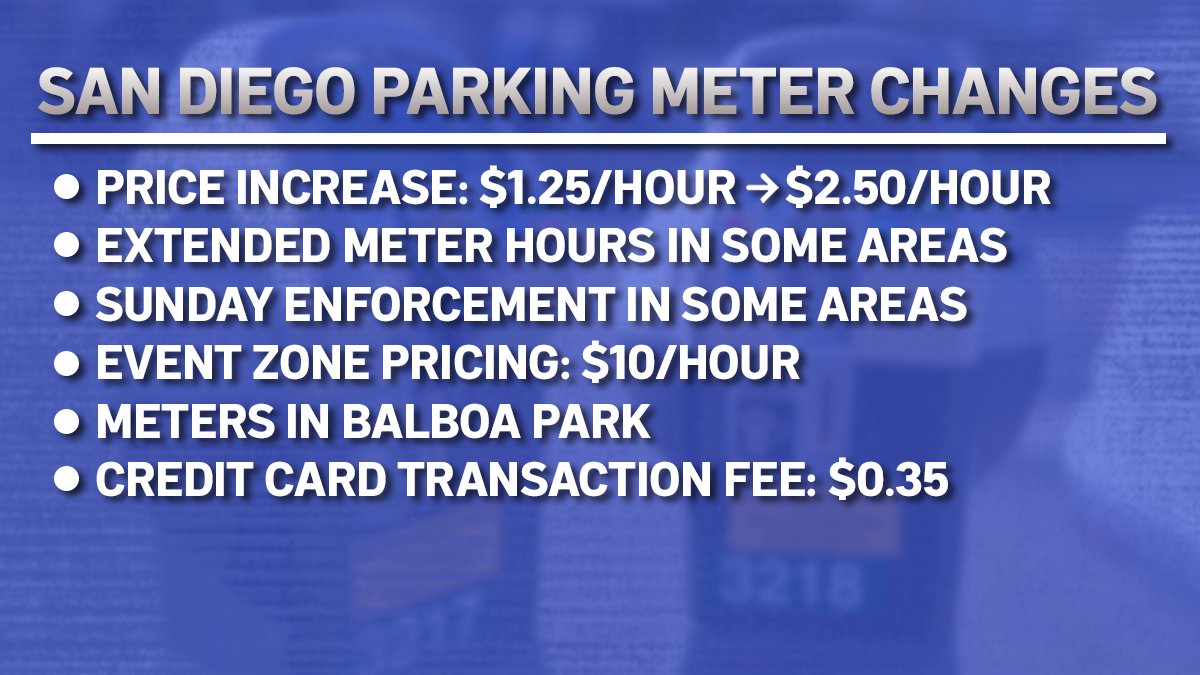
It may be even more exhausting for many when they learn that price increases haven’t delivered as much money as the city projected they would. An NBC 7 investigation discovered that double the price hasn’t equaled double the revenue.
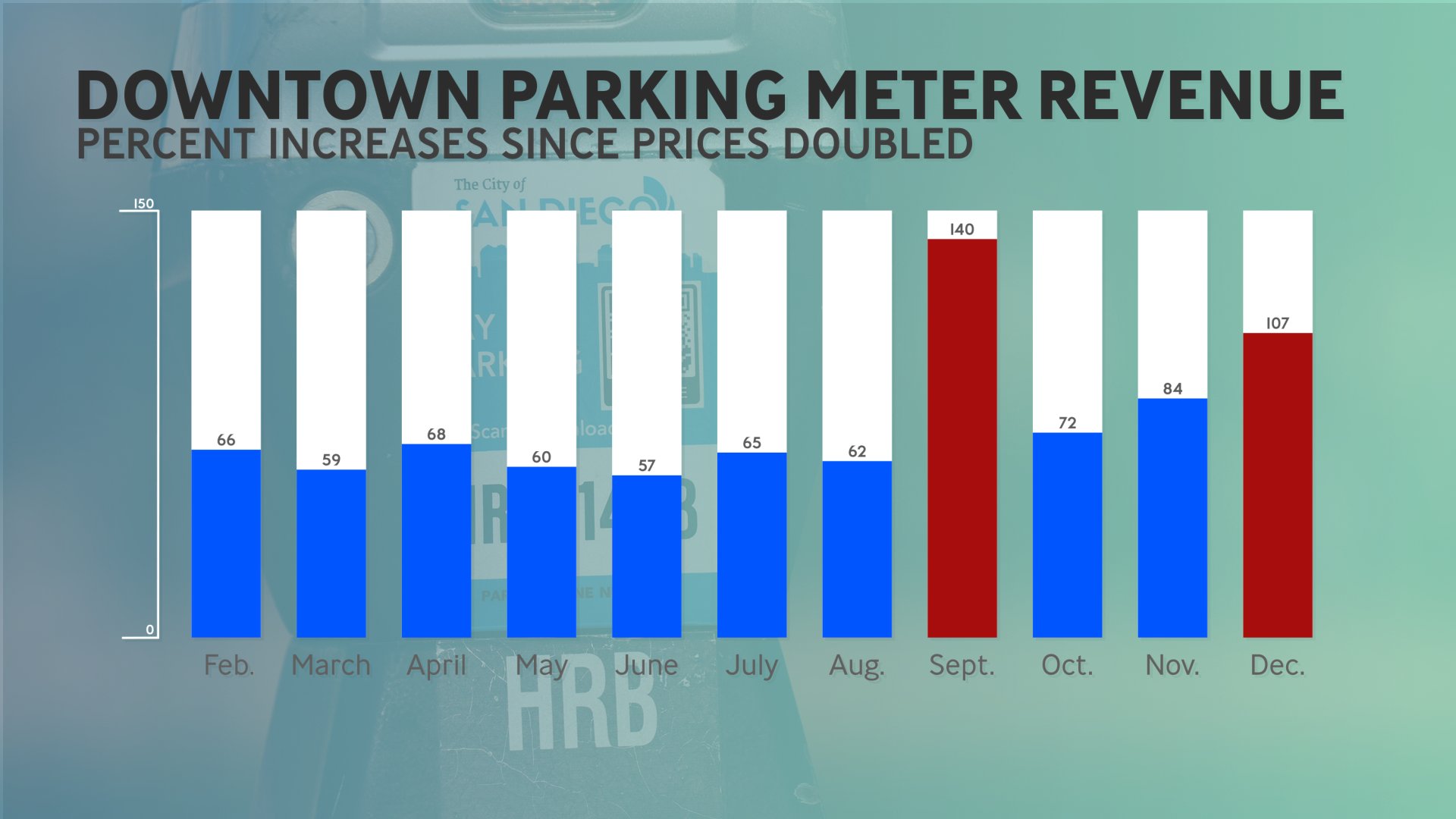
For parking meters across the city, revenue was up an average of 84% between February and December of 2025, compared with the same range of months in 2024.
Charles Modica, San Diego’s Independent Budget Analyst, said the reason why is simple.
“We expect that we will see an initial kind of phase of changing consumer behavior,” Modica told NBC 7. “Whether or not that changing consumer behavior remains changed, or if it gradually adjusts to a new baseline, is what we’ll be looking at.”
Modica said the increased prices equated to an additional $2.5 million in revenue for the last fiscal year, which ended June 30. That was $1.5 million lower than what San Diego projected they would pull in.
Because of the change in parking behavior, the city is now basing the 2026 fiscal year budget on much lower projections. Though it believes parking meters will bring in a total $19.2 million, it’s only budgeted to spend $15.9 million of the revenue that comes from meters.
Every dollar counts as the city endeavors to close the $300 million budget shortfall. But those gains could come at a cost for local businesses. That’s the concern for Gaslamp Quarter Association Executive Director Michael Trimble.
“It’s already a very challenging environment to do business,” Trimble said. “We’re definitely seeing a slowdown in business. Period. But then add the parking increases, it doesn’t help.”
Downtown is one of the areas where revenue showed signs of doubling, but only in the month of September, during the Padres’ playoff run, and for the holidays in December. The rest of the year was well below the hoped-for 100% or more increase.
Trimble told us he wasn’t surprised that people have altered their behavior when the prices changed.
“I mean, it’s just human nature,” Trimble said. “People are not going to come down and park in the same type of manner they did in the past. I mean, why wouldn’t they? People feel like the city has fee’d them to death.”
Lower revenue than expected, but covering repairs and maintenance
Outside of the city’s fiscal year calendar, the increase in revenue is more apparent. Between February and December of 2024, San Diego brought in roughly $8.4 million. The same time period in 2025 equated to $14.8 million.
The revenue totals don’t include parking meters in Balboa Park, which came online in January. City officials like Modica say the money has made a big difference for street repairs and maintenance.
“I will note that the amount that is being generated from the increased meter rates is pretty close to the amount that is actually required to maintain those streets in a good condition,” Modica said.
As these parking changes were taking place, the city of San Diego also took control of neighborhood parking districts. In the past, those groups were responsible for spending a percentage of parking meter revenue on street repairs and other community improvements. Now, the city controls spending.
San Diego mayor Todd Gloria sat down with NBC 7 on a recent episode of Politically Speaking. He defended the increases as not only necessary but beneficial.
“Making that decision is not popular,” Gloria said. “Clearly, it’s not, but I do know what’s popular: The fact that we’ve fixed, I think, really, 2,000 streetlights since that change was made. Because those dollars, again, have to stay in that neighborhood.”
Gloria said the city had to get in the game because it was losing out on millions of dollars while private companies were raking it in during special events and sports downtown.
“Our parking meter rates have been untouched for about a generation,” Gloria told NBC 7. “And that meant that a public asset, something that the taxpayers of this city own, was being undercharged, essentially, while the private sector was more than happy to meet the current market numbers.”
The mayor also said he wasn’t surprised that revenue hadn’t followed the price increases in doubling.
“I do know that has come as a revelation to certain council members and members of the public, but that’s basic economics, right?” Gloria said. “When prices go up, you know, utilization tends to go down a bit.”
While opponents of the sweeping parking changes have come out swinging, the city maintains that backing out of those changes would leave beloved – or even vital – city services vulnerable.
“We’re trying to provide all the services that a big city does with not as much money coming in the door to provide them,” Modica said. “It’s going to be a difficult budget cycle. Last year, we were able to pull those revenue levers. Those revenue levers have been pulled. So the city really needs to get serious about what services we are not going to provide at this point.”
Handing out more fines for parking violators
The city of San Diego doesn’t just charge more for parking. It also increased enforcement for parking violations.
In 2024, it handed out more than 86,000 citations to people who didn’t feed the meter or parked illegally. That amounted to about $3.7 million in fines.
Last year, the total number of citations jumped to more than 100,000, equaling nearly $5 million. That’s fines handed out, not money collected.
This story uses functionality that may not work in our app. Click here to open the story in your web browser.