
San Diego's new recycling bins make us miss Padres City Connect jerseys

“We’re excited for customers to experience the benefit of these new recycling bins” — Jeremy Bauer, Assistant director for environmental services
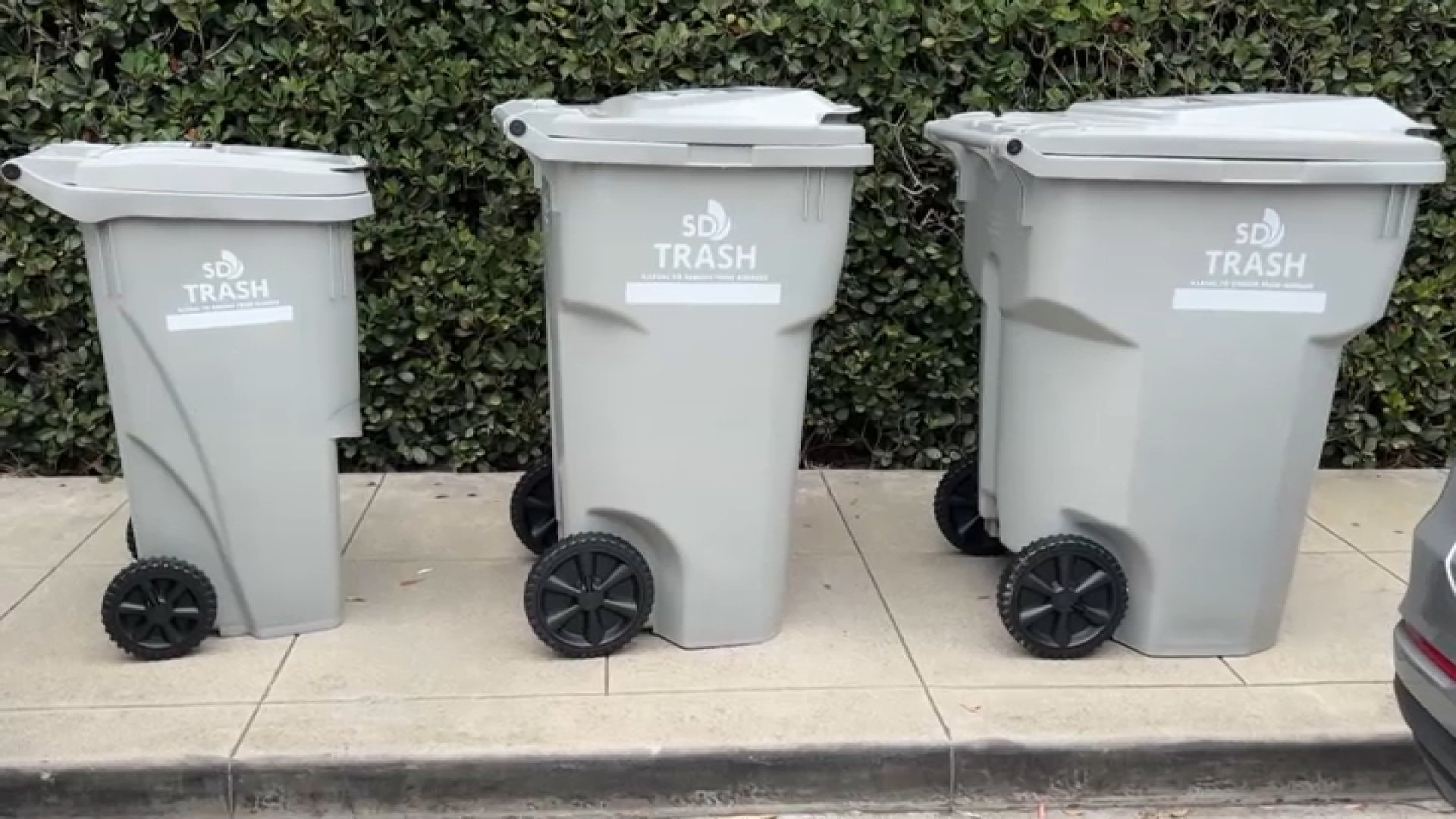
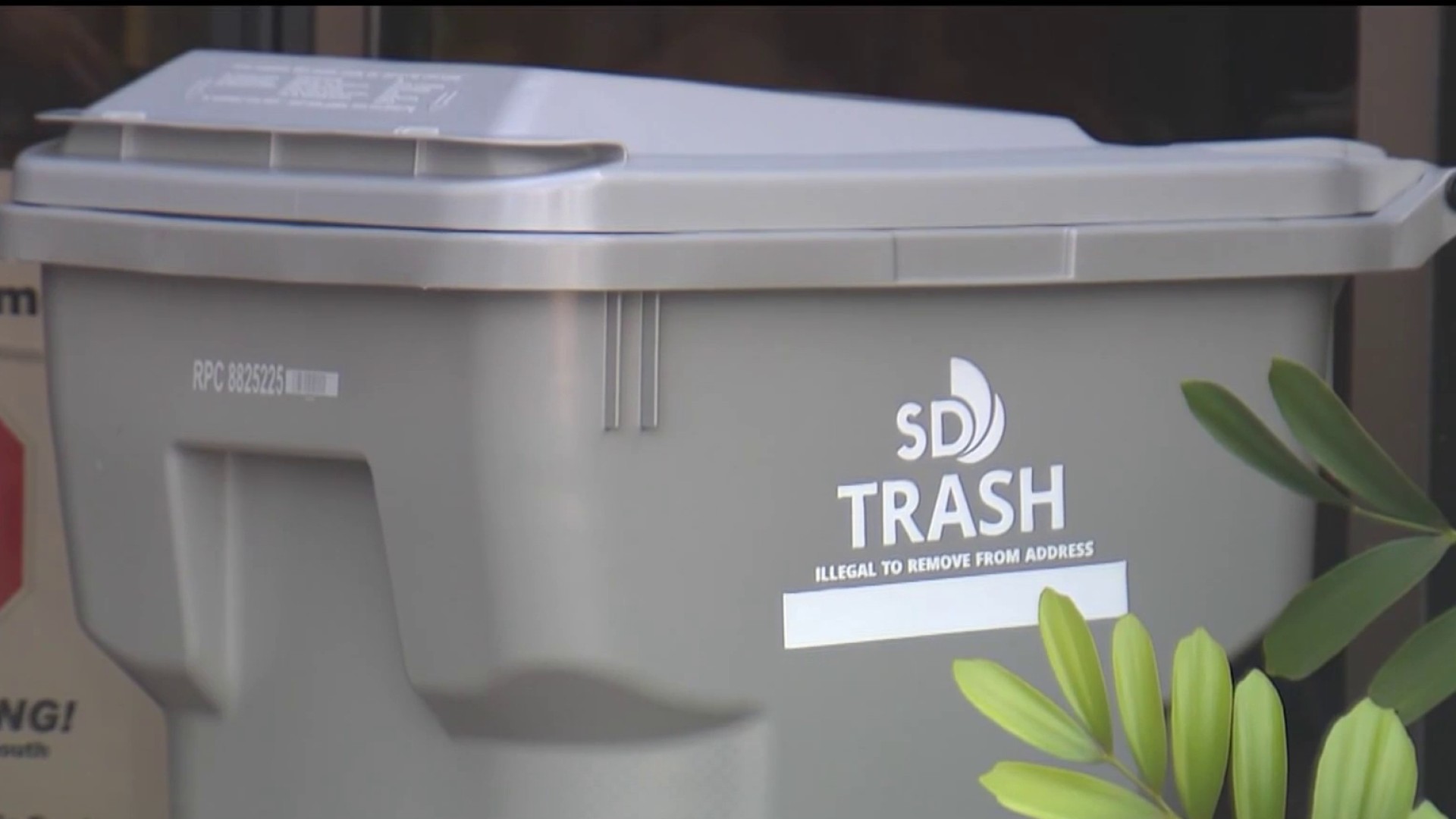
The city of San Diego, having mostly vanquished the old black trash bins for a light-gray alternative starting last fall — a process that is now 96% complete, officials said — announced Wednesday that a new exchange will begin Wednesday for the old bright-blue recycling bins. In their place will be a more mint-colored bin, one that seems reminiscent of one of the Padres City Connect colors, sort of a tropical blue-green that seems right for America’s Finest Beach City.
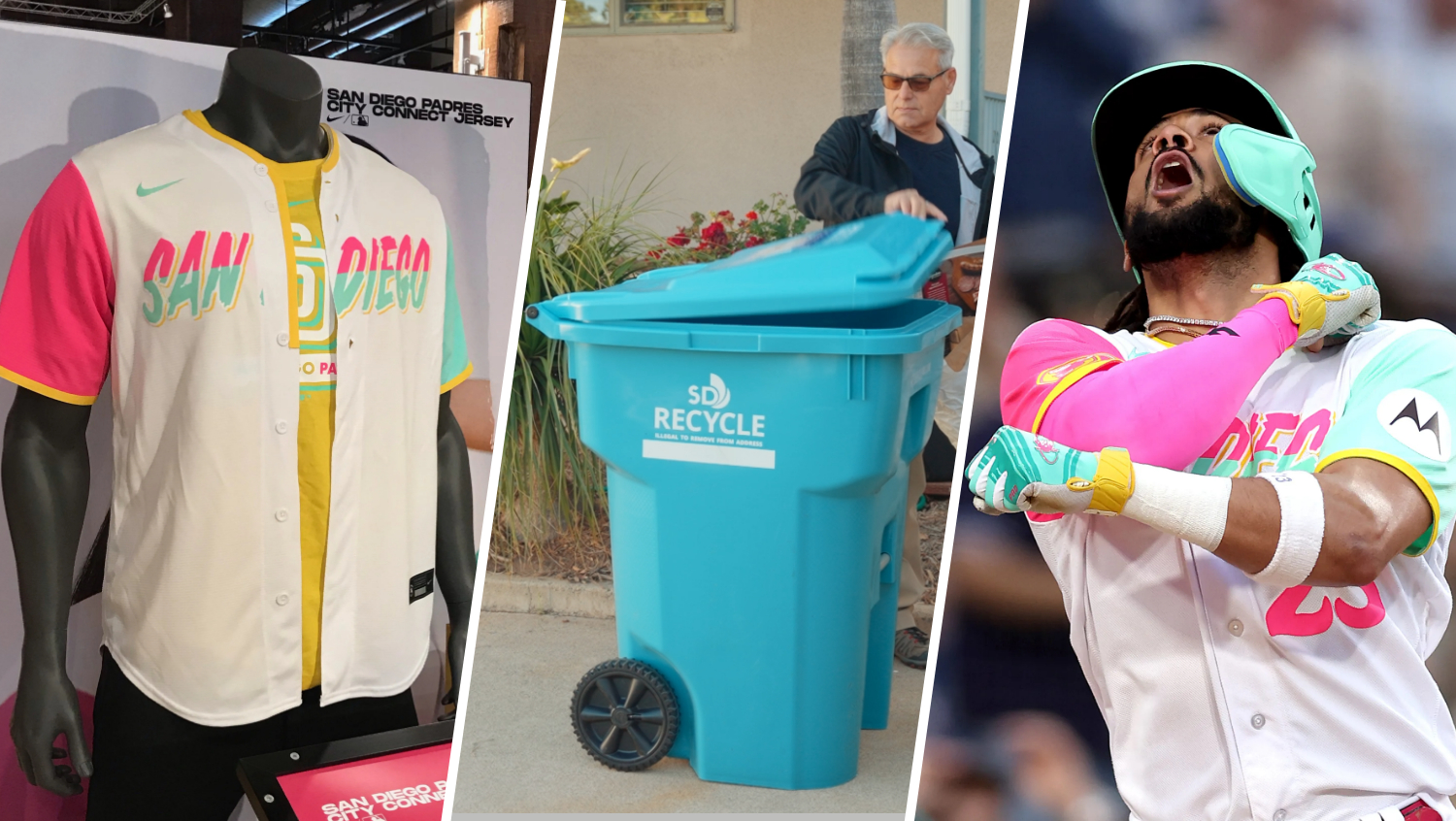
The new recycling-bin swap-out will likely take several months, as did the trash-bin exchange, but city officials say it will be worth it: The “new bins are more durable, easy to identify, better labeled and equipped with scannable tags to improve reliability and accountability.”
Most of the replacements will be implemented on customers’ normal pickup days, but with hundreds of thousands of cans in play, it could be the fall before the process is completed: ” The Ccty’s Environmental Services Department (ESD) is notifying customers about their bin delivery date through email and mailers being sent to property owners,” but people can also look up their estimated delivery date online.
Officials said they learned their lesson during the trash bin swap — this time, when the city is ready to give you a new recycling bin, a second city truck will follow the truck doing pickups and note that your bin is empty and ready for carting away, and will leave notes on the new bins with guidance on when and for how long the old bins need to be left out — as well as instructions on what to do if they aren’t picked up in two day.
Waste collection crews will continue servicing old containers until the new ones have arrived. Collection of recycling materials is bi-weekly. Weekly recycling service will begin July 1, 2027.
Voters narrowly passed Measure B in 2022, which helped repeal “The People’s Ordinance” trash collection model and allowed the city to charge a monthly fee for solid trash pickup for single-family homes and multi-family complexes with up to four residences on a single lot.
The June 2025 approval of the solid waste fee broke a 106-year-old precedent of the city not charging single-family homeowners a fee for trash pickup. Starting July 1, homeowners in the city began to be charged $42.76 a month for three 95-gallon cans — one for trash, one for recycling and one for organics such as yard waste or food scraps — regardless of how much waste they produce.
More on San Diego's sanitation story
Then-Council President Sean Elo-Rivera and Councilman Joe LaCava proposed Measure B in 2022 to allow the city to collect a fee for solid waste collection, transport, disposal and recycling, include the cost of bins and force short-term vacation rentals, accessory dwelling units and “mini-dorms” currently receiving city trash pickup to pay for the services.
Opponents of the waste fee were frustrated, claiming property taxes already paid for trash pickup. Even some initial supporters of Measure B felt they were hoodwinked, citing an estimated trash fee ranging from $23-$29. However, it was with the assumption that the city served 285,000 households.
The ESD, when faced with the prospect of a new fee, counted the number of households the city served following the election and came up with 226,495.
As a result, when a cost study came back in April 2025, the fee jumped to $36.72 per month on the low end and $47.59 on the high. That received almost universally negative feedback from the public, so a revised fee schedule then went to a range of $31.98-$42.76 in the first year by delaying certain services such as bulky item pickup and an electric vehicle pilot program.
Single-family refuse pickup is funded by the city’s general fund, which all residents pay into through property tax — whether they rent or own a single-family home, a condo or an apartment. The city takes away 300,000 tons of trash and 150,000 tons of recycling, compostables and yard waste annually.
The People’s Ordinance had been criticized for years by activists who called it inequitable because although every household pays property tax, only single-family households received trash pickup at no additional charge. In 2009, a San Diego County grand jury concluded that the ordinance had “outlived its usefulness in a 21st century society.”
According to city documents released with the ballot measure in 2022, the price of keeping the service as it existed without adding a fee was expected to cost at least $234.7 million between fiscal years 2023 and 2027.
So, what happens to the old recycling bins? They get recycled, of course!


