San Diego police still investigating staffing, response to Islamic Center shooting

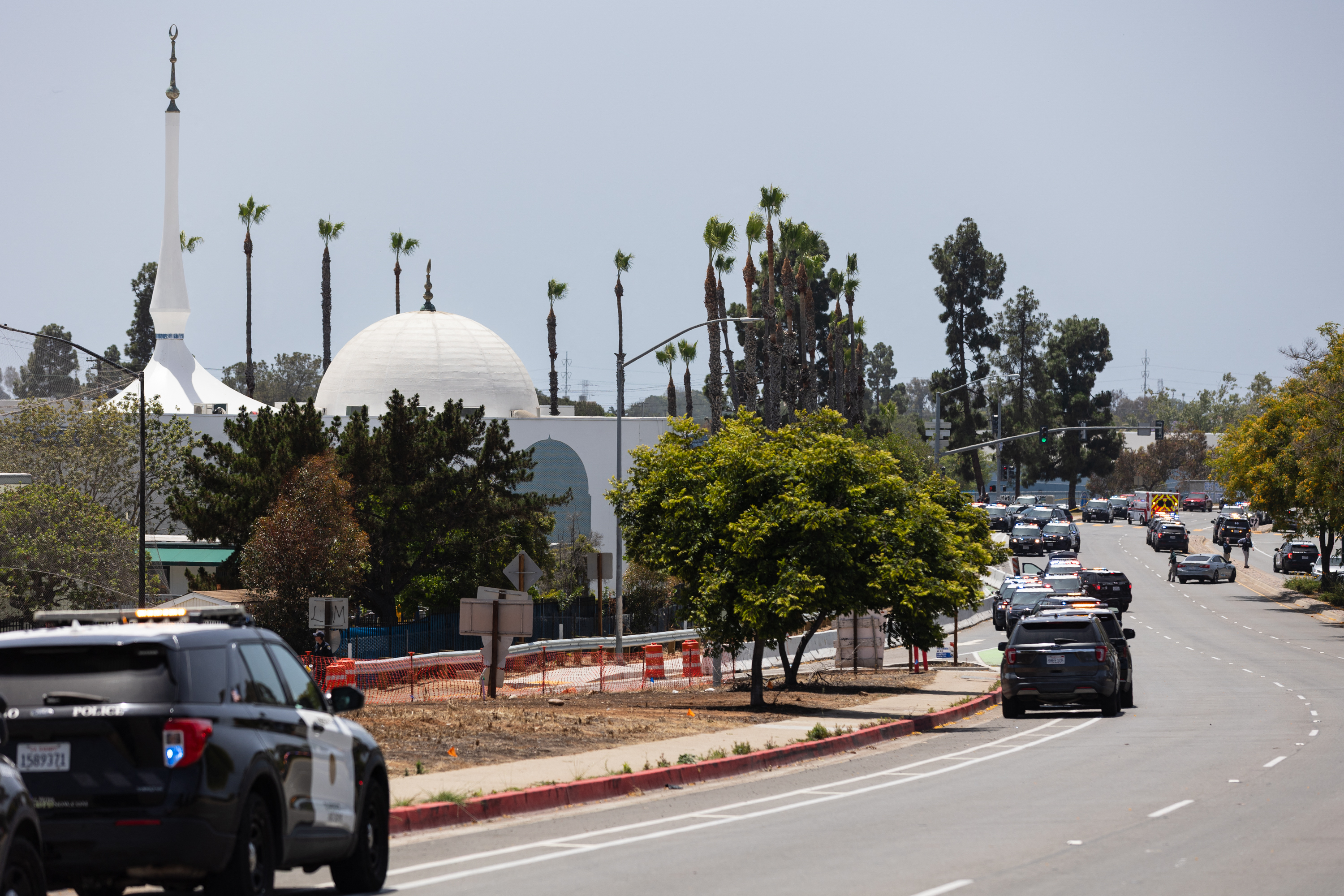
San Diego police said Friday they continue to investigate the deadly May 18 shooting at the Islamic Center of San Diego, including their own staffing and response, in the face of questions from the grieving community.
“We want the public to know that we are working on this,” SDPD spokeswoman Ashley Nicholes said in an interview Friday. “We want the same answers, right? What did we know? What could we do better? If there’s indications that could point to that, we want those answers too. And so we are right there with the community, and that’s why our investigators and the FBI are working hand-in-hand, day and night, to try to put those answers together.”
Deadly mosque shooting
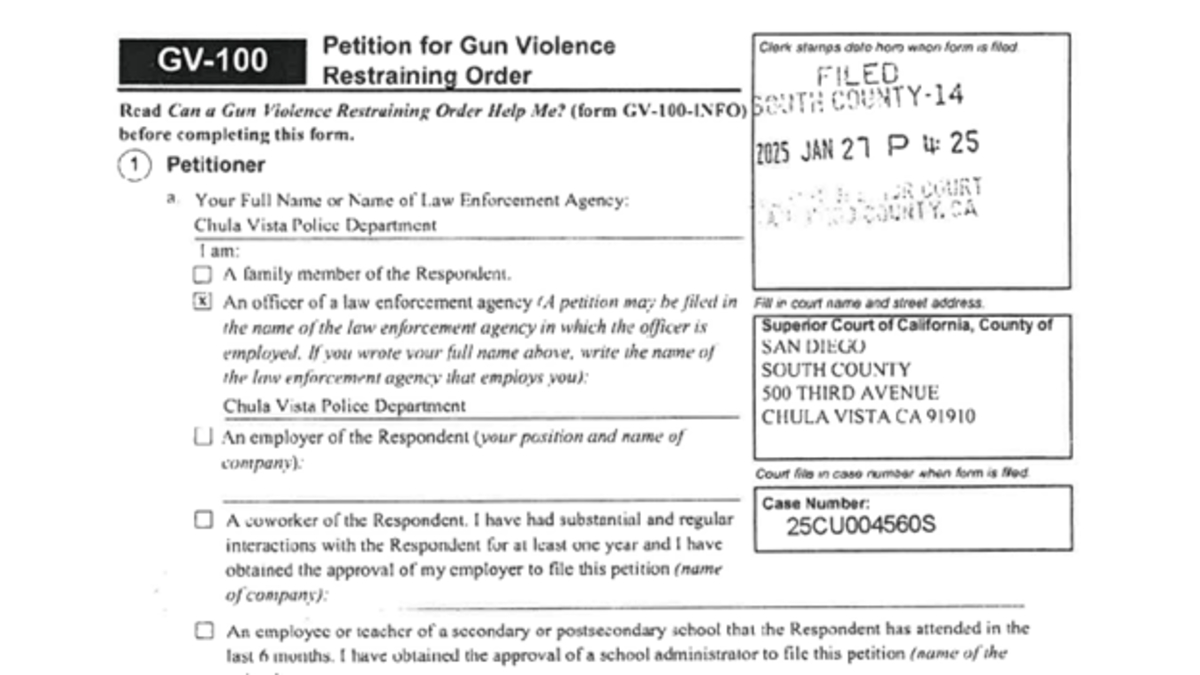
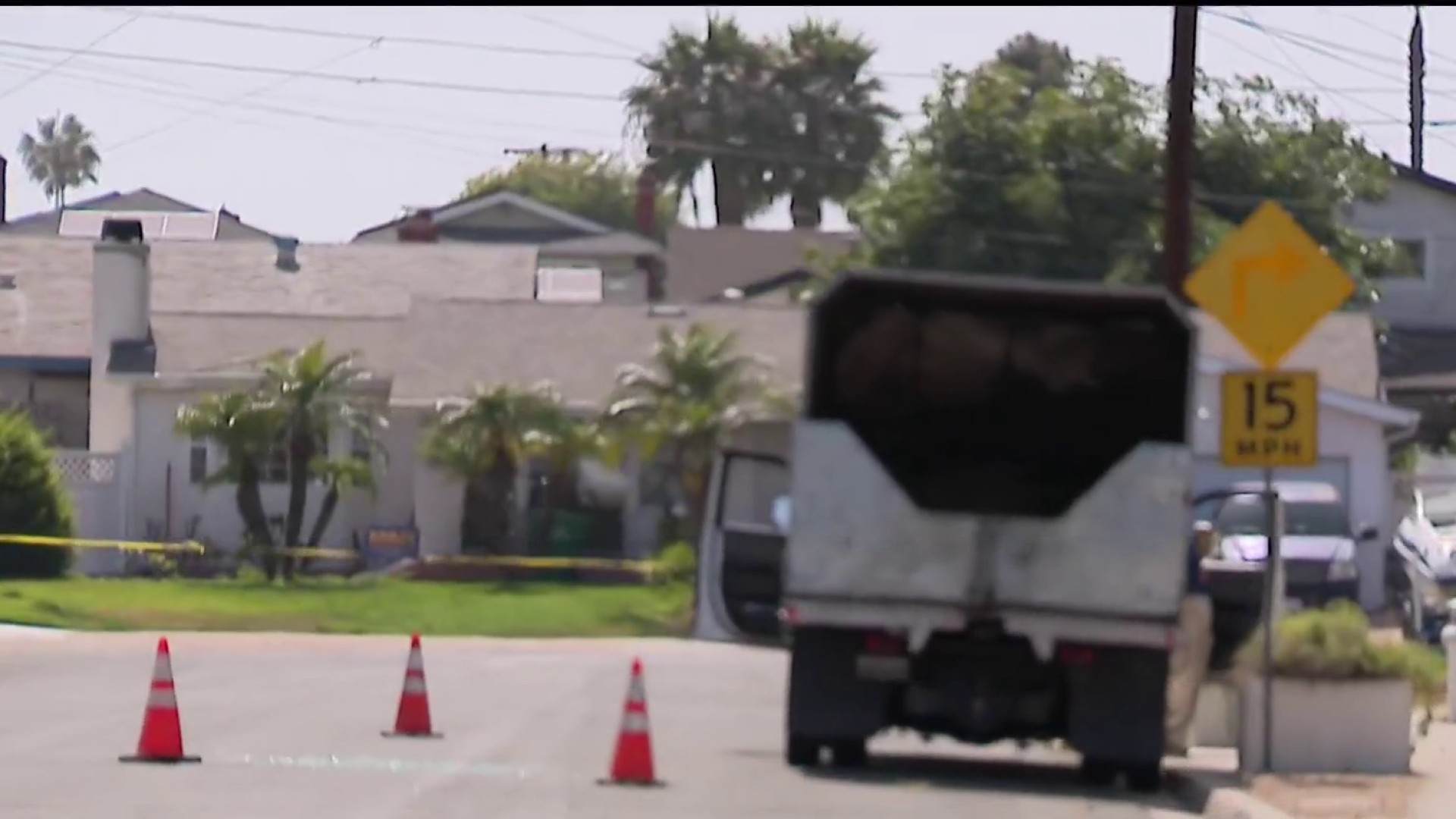
Police released a timeline last Friday showing the mother of one of the teenage gunmen first called 911 two hours before the shooting to report her son, 17-year-old Cain Clark, and a weapon missing from their home. According to police, she said at the time that he left with a man who may have been named Caleb whom he met online and that both were wearing camouflage. Caleb turned out to be 18-year-old Caleb Vazquez, who court records show so concerned Chula Vista police with his behavior idolizing mass shooters that the department obtained a gun violence restraining order against him in January 2025.
About an hour after her initial call, Clark’s mother called 911 again, police said, to report additional weapons missing as well as a suicide note and hate-filled writings found on his computer. Four minutes later, the call was upgraded in priority level and four minutes after that, officers headed to his mother’s house, arriving at 11:10 a.m. Shortly thereafter, a license plate reader picked up the teen’s vehicle in Mission Valley, which officers went to check, according to police, just a few minutes before the first call of shots fired at the Islamic Center of San Diego in Clairemont.
“There’s a lot of variables that go into a response like this,” Nicholes said. “We had initial information, but there was a lot of information that we didn’t have. We didn’t know the second suspect’s full name. Knowing all that we are piecing together now is going to provide us that full picture of what really happened, and I know it’s frustrating. It takes time.”
SDPD has long been plagued by concerns over staffing and response times. NBC 7 filed a public records request for staffing levels on the day of the shooting, a request SDPD denied, citing “operational security.”
“We’re talking about uniformed patrol officers on patrol in marked vehicles,” David Loy, legal director of the First Amendment Coalition, said of that denial. “This is not secret information. This is visible to members of the public already.”
“The public has a compelling interest in knowing whether law enforcement is sufficiently staffed and ready to respond to crises as they arise,” Loy continued. “Members of the public might get access to these records and think there’s nothing more the police could have done. Other members of the public might think that the police could have done more.”
“The issue is simply for the public to have access to the information that they need to make those decisions for themselves,” Loy continued. “Transparency is the oxygen of accountability.”
“To try to paint the picture that staffing could have prevented this — I think it’s too early,” Nicholes said. “There’s a lot of review that needs to go into that. And we’re going to be looking at that as the investigation goes on.”
“We were down officers in Northern Division, but that’s not uncommon,” Nicholes continued. “We go out short-staffed almost every shift, every day.”
Nicholes said the department is down about 200 officers due to COVID and a wave of retirements, but it expects that number to decline as it continues to recruit, hire and train more officers.
Jim Cavanaugh, a retired special-agent-in-charge with the Bureau of Alcohol, Tobacco and Firearms, said he found little he would have done differently based on his review of SDPD’s preliminary timeline.
“You have to evaluate the response knowing what the police knew at the time, not knowing what we know now,” said Cavanaugh, who is currently a law enforcement analyst.
“The problem with these guys is their hate wasn’t just directed at the Muslim and Islamic community,” Cavanaugh said, referencing writings the shooters left behind filled with extremist views. “It was directed at everyone. They hated women. They hated minorities. They hated other religions. So who are you going to alert? They hate everybody.”
“You’ve got to pick them up early, when there’s restraining orders and guns and suicidal activity, that’s when you’ve got to pick them up,” he continued. “In those last minutes and hours, it’s really tough to stop.”
When asked about the concerns community members raised on Vazquez, Cavanaugh said cases can sometimes fall through the cracks because of a diffusion of responsibility, recommending specialized units in every jurisdiction focused on preventing mass shootings.
Cavanaugh added that the “miracle” of the shooting was security guard Amin Abdullah, who radioed in a lockdown while engaging in a gun battle with the shooters before he was killed, and the two other victims, Mansour Kaziha and Nadir Awad, whose presence in the parking lot drew the gunmen outside – away from the 140 children in the school – to kill the men as well.
“This is a lesson for all facilities, schools, businesses, institutions,” Cavanaugh said. “If you don’t have security out front that can stop a person that gets out of a car with a rifle or a handgun and wants to enter into your facility, you don’t have any security.”