Allegations against labor leader Cesar Chavez put San Diego events, building names in limbo

San Diego area leaders were weighing how to move forward with celebrations and were considering name changes to buildings that honor Cesar Chavez amid allegations against the civil rights leader.
An annual breakfast on March 25 is part of the Cesar Chavez Week of Action in San Diego County, and “is an opportunity to recognize the ongoing work of service, community empowerment and labor rights,” a spokesperson for the county said. “We remain focused on supporting activities that uplift those principles but are also weighing how the day is marked based on new information that may have implications for the legacy of its namesake.” It appeared by Wednesday, Chavez’s name had been removed from the city’s event website.
Allegations began surfacing ahead of a bombshell New York Times investigation that unveiled details from two women who said Chavez sexually abused them for years when they were young girls and he was a famed labor leader in the 1970s. His co-founder of United Farmworkers of America, Dolores Huerta, also revealed on Wednesday sexual assaults, allegedly by Chavez, which resulted in the birth of two children.
“I am nearly 96 years old, and for the last 60 years have kept a secret because I believed that exposing the truth would hurt the farmworker movement I have spent my entire life fighting for,” Huerta said in a statement released Wednesday. “I have encouraged people to always use their voice. Following the New York Times’ multi-year investigation into sexual misconduct by Cesar Chavez, I can no longer stay silent and must share my own experiences.”
The Times reported it could not corroborate Huerta’s allegations. The news organization said it interviewed more than 60 people, including Chavez’s top aides at the time, his relatives and former UFW members during the investigation.
The Chavez family released its own statement that read: “We honor the voices of those who feel unheard and who report sexual abuse. This is deeply painful for our family. We hope these matters are approached thoughtfully and fairly.”
Some members of San Diego’s congressional delegation, including Democrats Juan Vargas and Mike Levin, called for Cavez’s name to be removed from landmarks, holidays and institutions. Levin said institutions should instead bear the name of the organization Chavez helped co-found, United Farm Workers.
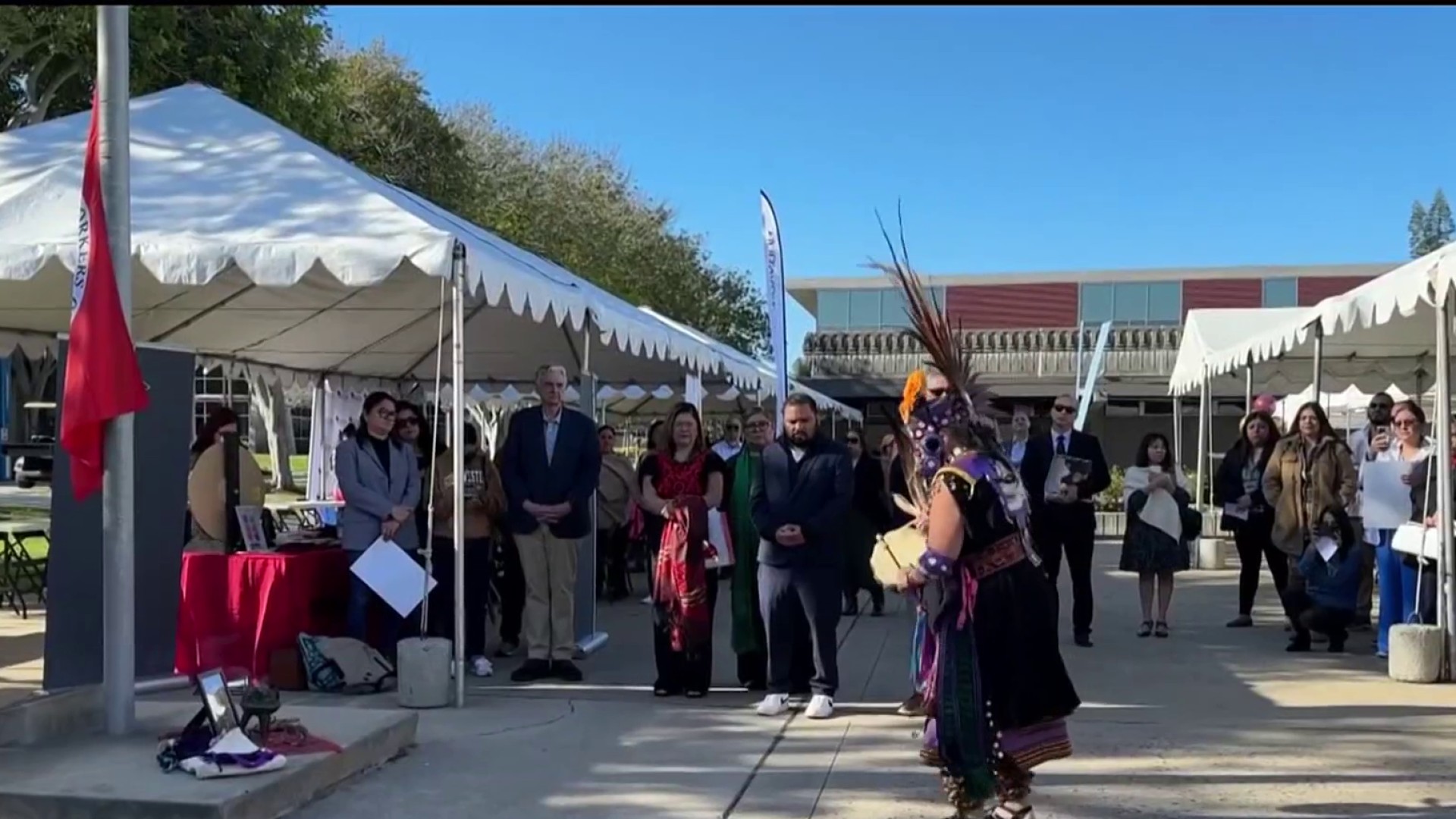
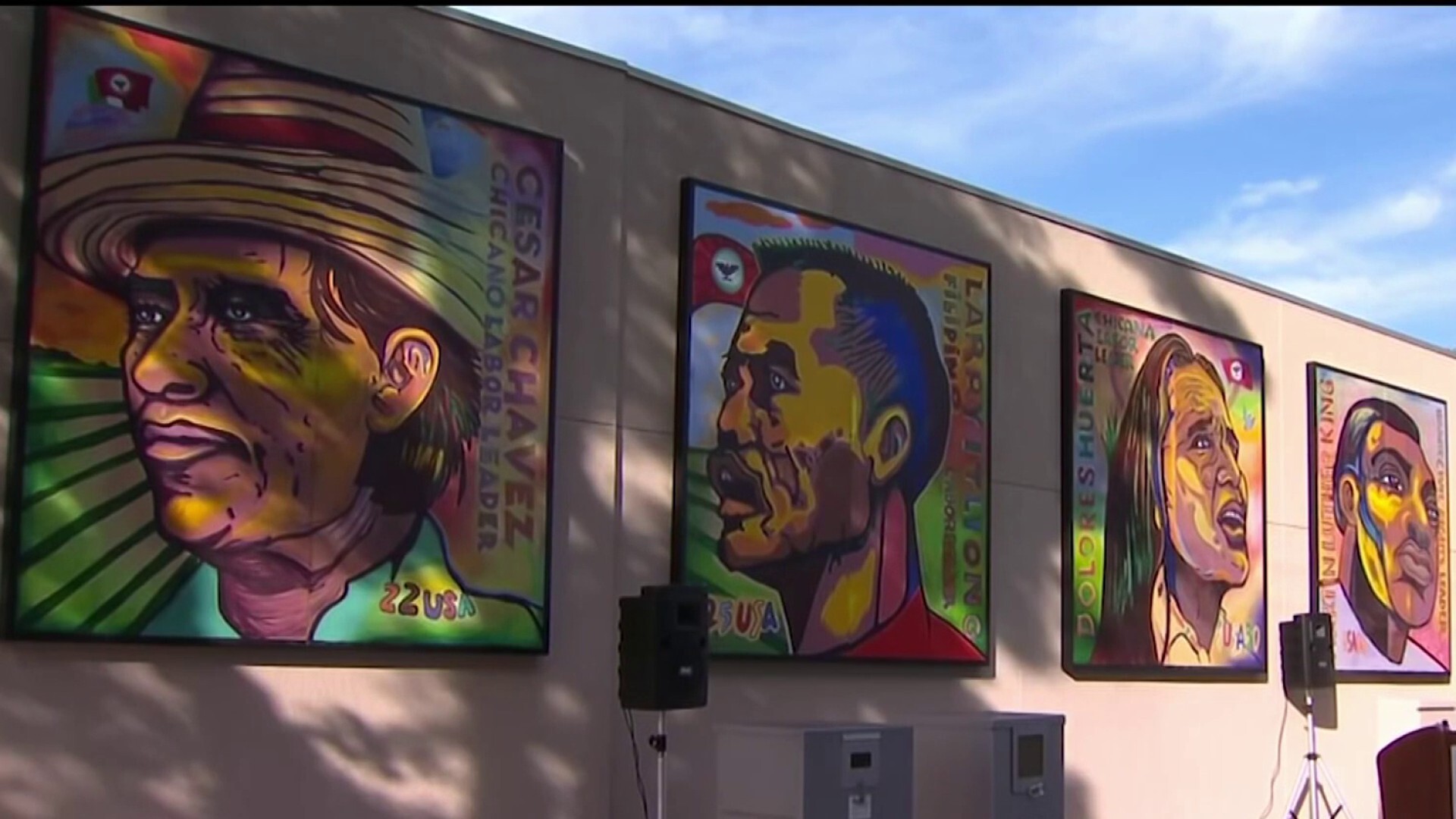
Chavez helped create and lead the farmworkers movement and his impact is felt across San Diego County, on the streets and schools named after him, in murals and in events held in his honor.
San Diego’s Barrio Logan neighborhood has a park and roadway named after Chavez. A San Diego Unified School District elementary school in nearby Southcrest is also named after Chavez. His impact on civil rights and instilling the farming community with hope is enshrined in a farming mural at Chicano Park. A Navy ship parked in San Diego also bears the civil rights leader’s name.
Southwestern College on Wednesday canceled an event in Chavez’s name in light of the allegations and the San Diego Community College District and the San Diego Unified School District, which each have buildings named on behalf of the leader, said in separate statements their leaders were assessing their connections to the labor leader.
“Our first responsibility is to acknowledge and support anyone who may have been harmed. As we move forward, including conversations about a school that bears his name, our focus will be on listening deeply to better understand the impact to the school community and how we might collectively move forward in a way that prioritizes student safety and a sense of belonging,” the San Diego Unified School District said in a statement.
San Diego Mayor Todd Gloria expressed support for survivors and “the hard-fought progress the farmworker-rights movement has achieved over the past six decades.”
“Generations of organizers and workers have advanced dignity, safety, and fairness in the fields, improving lives across our state and nation. That legacy belongs to the movement and to the people who carried it forward,” the Mayor’s statement read. His office said it is “evaluating next steps on a potential renaming of Cesar Chavez Parkway.”
The sentiment echoed comments made by Gov. Gavin Newsom during a news conference on Wednesday, although the state leader said he was still “processing” the news and wouldn’t commit to making any changes to the state holiday.
“We’re just gonna have to reflect on all of that and reflect on a farm worker’s movement and a labor movement that was much bigger than one man and celebrate that,” the governor said. “And that will be our focus as we process what the next steps are.”
California became the first state to establish March 31, Chavez’s birthday, as a day commemorating the labor leader whose movement was uplifted by farm workers in the state. Others followed. In 2014, then-President Barack Obama proclaimed March 31 as national Cesar Chavez Day, urging Americans to honor his legacy.
Even before the Times revelations were published, organizations that have long championed Cesar Chavez and his work were releasing statements about the allegations. The Cesar Chavez Foundation said it was in a statement it was “deeply shocked and saddened,” while the United Farm Workers issued a statement stating that while it has not have any firsthand knowledge, it learned of “deeply troubling allegations” that Chavez, one of the union’s co-founders, “behaved in ways that are incompatible with our organization’s values.”
UFW also said it will not be taking part in any March 31 Cesar Chavez Day activities and urged people around the country to participate in immigration justice events or acts of service instead of the typical events in March to commemorate Chavez’s legacy.
“We cannot celebrate the legacy of someone who carried out such vile abuse. I’m praying for the victims who have carried the pain of this abuse for decades. They deserve nothing less than accountability, support, and to be heard,” Vargas said in a statement.
Born in Yuma, Arizona, Chavez grew up in a Mexican-American family that traveled around California picking lettuce, grapes, cotton and other seasonal crops. He died in California in 1993 at age 66.
Chavez is known nationally for his early organizing in the fields, a hunger strike, a grape boycott and eventual victory in getting growers to negotiate with farmworkers for better wages and working conditions.
In 1962, Chavez and Huerta co-founded the National Farm Workers Association, which became the United Farm Workers of America.
Farmworkers are crucial to agribusiness in California, which grows nearly half the nation’s fruits, nuts and vegetables.
Chavez protested against poor pay and often-miserable work conditions. There were no toilets in the fields for workers, who weeded fields with short-handled hoes that forced them to bend over for hours at a time.
Bosses frequently ignored the health and wages of their workers, many of whom were Spanish-speakers in the country temporarily or illegally and had little political or legal clout to prevent abuses.
California leaders were also reacting to the news Wednesday. Sen. Alex Padilla expressed his support for abuse survivors.
“Confronting painful truths and ensuring accountability is essential to honoring the very values the greater farm worker movement stands for — values rooted in dignity and justice for all,” Padilla’s statement read, in part.
Former Attorney General and Gubernatorial candidate Xavier Becerra, a long-time supporter of the United Farmworkers of America, expressed support and said the revelations don’t take away from the labor movement.
“There is no substitute for the truth. The United Farm Workers movement was historic, and it is real. The fight for justice for America’s farmworkers was life-changing and real. Clearly, there is a painful side to this story and Cesar Chavez that we must face. Iconic labor leader Dolores Huerta has come forward to tell her story and use her voice to empower other survivors to tell their story. We must stand behind the truth and those who live it,” Becerra said.
This story uses functionality that may not work in our app. Click here to open the story in your web browser.